Analyst of the Month
Kushagra Aryal: Analyst of the Month
Meet Kushagra Aryal: Venture Capital Analyst at Maelstrom

Kevin Li
August 4, 2025
Meet Kushagra Aryal: Venture Capital Analyst at Maelstrom
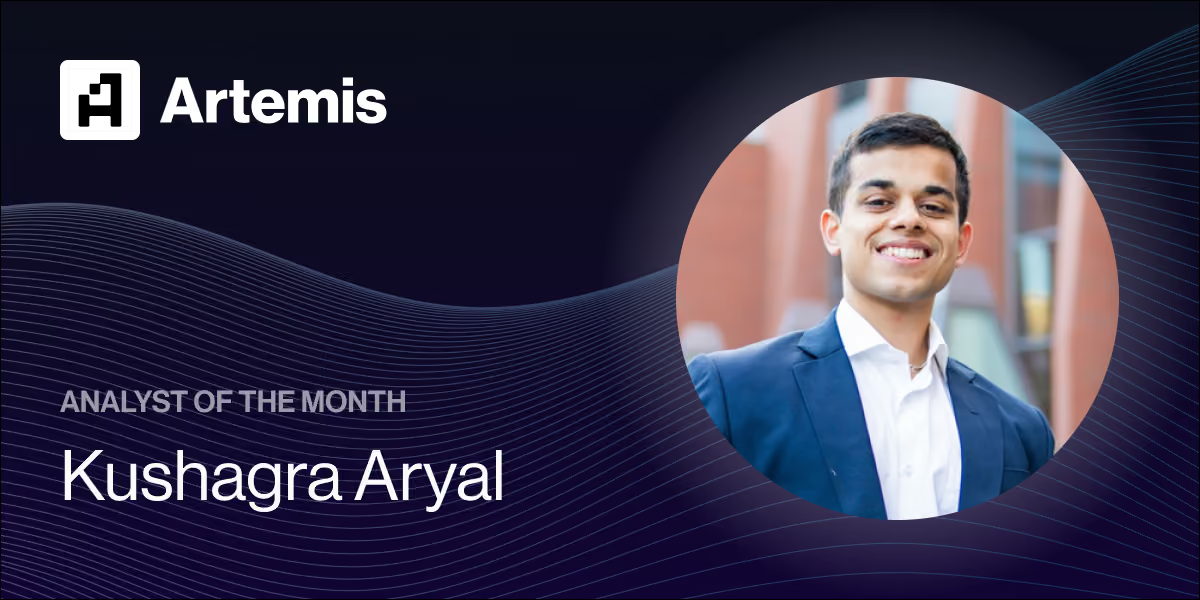
Welcome to the 21st edition of the Analyst of the Month
Our mission at Artemis is to help shape crypto into a more fundamentals-driven asset class by building THE on-chain metrics with leading analysts and protocols.
Every month, we highlight a leading analyst who takes a long-term view of crypto.
This month we highlight Kushagra Aryal, Investor at Maelstrom, a venture fund and family office founded by Arthur Hayes. Maelstrom operates across early-stage venture, liquid crypto markets, and strategic advisory. Kushagra brings a unique blend of traditional finance knowledge and hands-on crypto investing experience. A graduate of Wharton, he’s worked across product management at PayPal, research roles at ArkStream Capital, and venture sourcing through Bessemer’s Steel DAO. Today, he plays a key role at Maelstrom in shaping theses around the next generation of crypto infrastructure and market structure.
Early on, I became fascinated with personal finance books, maxed out my IRAs, and traded index funds with the dream of retiring young. I started buying BTC as a higher return bet to stocks on my 18th birthday by buying $100 of BTC on Coinbase. Right before college, I offered “homework” services through Discord communities, and some clients started paying me in Bitcoin and Ethereum. Managing these coins sparked a deeper interest in crypto, leading me to read the Bitcoin white paper and embrace the fiat debasement thesis. Since then, I’ve been steadily allocating to both BTC and ETH.
At PayPal, I saw firsthand how small product tweaks could drive eight figure revenue, especially in areas like fraud protection, where a few basis points scaled across millions of transactions made a massive impact. Working in large enterprise environments also taught me how hard it is to build great products, and that complexity filters into how I evaluate early crypto protocols. I often use the product myself to understand how the team thinks. My finance background rounds that out, giving me tools to analyze projects at the earlier stages and those with traction. Ultimately, my framework blends product intuition with fundamental analysis to form a full stack view of each deal.
Speculators, systematic traders, and venture investors all still play a role, so memes and momentum remain part of the market. But the bar has risen. Liquid token investors today are far more discerning. Projects without credible tokenomics or revenue models are losing their premium. Buybacks might make sense for mature protocols, but most early stage teams are better off reinvesting in growth.
Hyperliquid is evolving into a plug and play liquidity layer. Instead of building exchanges from scratch, partners can embed its order book engine directly into their platforms. Liquidity on Hyperliquid already surpasses that of many mid tier CEXs, and I wouldn’t be surprised to see a centralized exchange integrate it within the next year. Meanwhile, HyperEVM is gaining traction among developers, and new primitives like tokenized HLP vaults are only possible within this ecosystem. These factors together reinforce its position as a long term blue chip.
Large AI labs are racing to acquire high quality, multimodal datasets, voice, medical, enterprise, and other private data that isn’t publicly accessible. Startups are stepping in to broker that data, enabling consumers and rights holders to monetize what they own and supplying curated datasets to model developers. Blockchain provides the rails for provenance, incentives, and auditability, making crypto uniquely well suited to power these marketplaces. With billions in training budgets chasing scarce data, this segment is heating up fast and entering a clear high growth phase.
Data quality in crypto is messy. Even “clean” datasets from trusted providers can contradict each other. I often need to triangulate between Artemis, Dune, DeFi Llama, Token Terminal, and others, then manually sanity check the numbers. The hardest part isn’t collecting data, but trusting the data. Getting to a reliable, synthesized view often takes longer than the actual analysis. The real challenge is judgment, knowing which data to believe, and when.
Equity vehicles holding crypto assets often trade at a premium to their net asset value, offering early PIPE investors leveraged exposure to underlying coins. This structure also appeals to institutions seeking crypto upside while constrained by mandates that prevent direct token ownership. Recently, new vehicles have begun targeting riskier assets beyond Bitcoin and ETH, but their durability will be tested as early investor lockups expire. For now, the model serves as a practical bridge between TradFi capital and the crypto markets.
I’m looking into secondary shares of crypto companies likely to IPO within 12 to 24 months, due to premium comps such as Circle, Robinhood, and Coinbase. Exchange tokens are another key focus, particularly as Hyperliquid’s emergence reshapes how these assets capture fee flows. Both segments present mispriced optionality relative to prevailing narratives, offering liquid exposure to the structural growth of crypto infrastructure.
Artemis’s chart builder surfaces investor relevant KPIs like perp volume share, active wallets, and protocol revenue without the need to write SQL. Its Excel plug-in feeds data directly into my models, eliminating API scripts. By combining crypto native and TradFi metrics in a single dashboard, Artemis streamlines hypothesis testing and accelerates analysis. Most other tools address only fragments of this workflow.
You can find or reach out to Kushagra on LinkedIn or Twitter and learn more about Maelstrom here.
Written by ex-VCs at leading funds. Learn from leading digital asset investors.